Sonic Cues Shape Player Journeys Across Reel Spins, Dealer Tables, and Sports Markets in Mobile Environments
Harper Lehmann · Nov 9, 2026
Sonic Cues Shape Player Journeys Across Reel Spins, Dealer Tables, and Sports Markets in Mobile Environments
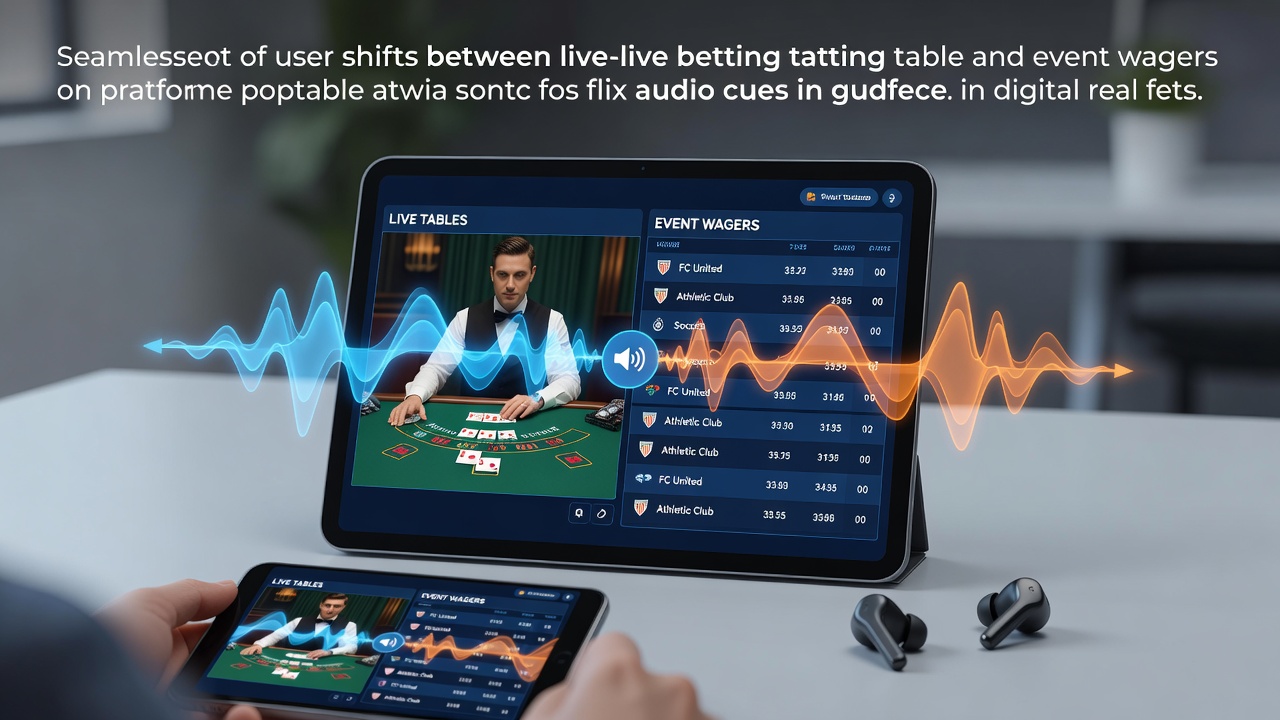
Audio cues embedded in digital reel interfaces direct attention and prompt transitions toward live dealer tables and event wagers on portable devices, where layered sound signals replace visual alerts during high-engagement periods. Developers program distinct frequency patterns and rhythmic shifts that activate when reel sequences near completion, creating auditory pathways that align with live table entry points and betting market updates. These mechanisms operate across major mobile platforms, where compressed audio files trigger at precise intervals to maintain session continuity without requiring menu navigation.
Core Audio Mechanisms in Reel Systems
Reel applications employ progressive tone layering that escalates in pitch and tempo as spin cycles conclude, while synchronized sub-bass pulses preview ambient sounds from live dealer environments. Data collected from platform analytics in 2025 shows that users respond to these layered signals by initiating table switches within three to five seconds of cue activation. Engineers calibrate these cues against device speaker profiles so that even on lower-volume settings the transition indicators remain detectable. Research from the University of Nevada, Las Vegas gaming technology program indicates that such audio layering reduces cognitive load during mode changes compared to purely visual prompts.
Transition Pathways to Live Tables
Live table entry sequences begin when reel audio introduces a sustained harmonic overlay that matches the acoustic signature of dealer table streams. This overlay fades reel mechanical noises while introducing soft card shuffle textures and chip stacking sounds, preparing users for the shift. Portable device accelerometers sometimes pair with these audio changes to adjust haptic feedback in tandem, though the primary guidance remains sonic. Observers tracking session logs report that platforms implementing these blended cues record higher completion rates for table joins during peak evening hours.
Integration With Event Wager Interfaces
Event wager sections activate when reel audio incorporates short melodic motifs drawn from stadium or arena recordings, signaling market availability for live sports or competition outcomes. These motifs repeat at decreasing intervals until a user selects a betting line or returns to reel play. In November 2026 several operators expanded spatial audio support on flagship handsets, allowing directional cues to indicate whether a wager opportunity appears on the left or right side of the screen layout. Industry reports compiled by the Canadian Gaming Association document measurable increases in cross-product movement when these spatial signals accompany standard reel audio.
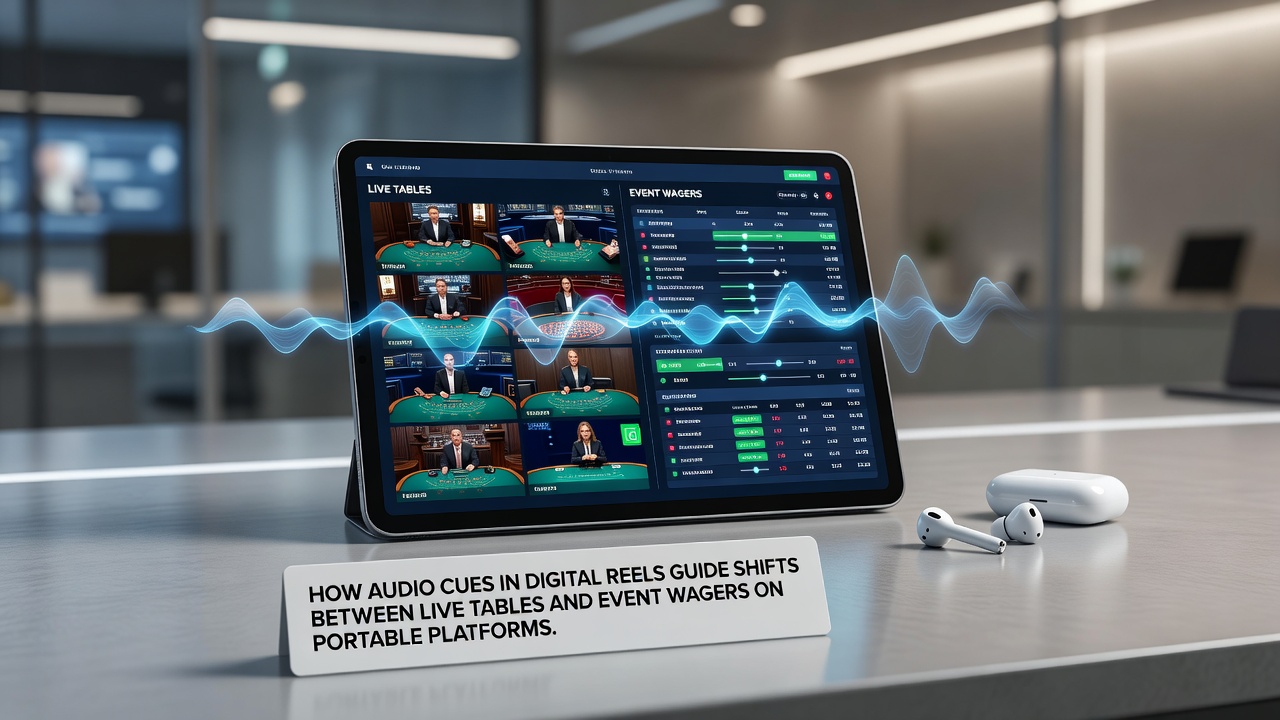
Audio engineers adjust decibel ranges and frequency bands so that event wager alerts sit comfortably above background reel noise yet avoid startling users mid-session. The result is a continuous auditory thread that links reel activity to live markets without abrupt volume jumps.
Device-Specific Adaptations and Standards
Portable platforms apply device-level equalisation profiles that alter cue playback depending on whether users connect headphones or rely on built-in speakers. Headphone modes emphasise higher-frequency detail for precise transition timing, whereas speaker playback broadens the signal to compensate for ambient room noise. Regulatory frameworks outside the United Kingdom, including guidelines issued by the Nevada Gaming Control Board, require consistent audio accessibility across hardware variants. Compliance testing verifies that cue volume remains within safe listening thresholds while preserving directional clarity on tablets and phones alike.
Performance Metrics Across User Sessions
Session telemetry gathered across multiple operators reveals that audio-guided transitions correlate with extended play intervals spanning reel, table, and wager products. Average dwell time on live tables increases when preceding reel audio incorporates matching timbres, according to aggregated figures released by the International Association of Gaming Regulators. Conversely, platforms that rely solely on visual banners show slower uptake of cross-mode movement during the same observation windows. These patterns hold across both iOS and Android ecosystems when audio calibration accounts for operating system notification priorities.
Conclusion
Audio cue architecture continues to evolve as portable hardware supports richer spatial rendering and lower-latency streaming. Developers refine frequency maps and motif libraries to maintain clarity across diverse acoustic environments, while operators monitor engagement data to validate cue effectiveness. The documented role of sound design in directing movement between reels, live tables, and event wagers demonstrates a measurable influence on session flow that persists into late 2026 and beyond.